How to Create a Fair and Comprehensive Dance Teacher Contract
A dance teacher contract is more than just a formality—it’s one of the most important tools for running a professional and stable studio. A well-written agreement sets clear expectations, reduces misunderstandings, and helps both the studio and the instructor build a long-term working relationship.
Many issues between studios and instructors don’t come from bad intentions. They come from unclear assumptions—about pay, responsibilities, scheduling, or ownership of choreography. A strong contract removes that ambiguity and replaces it with clarity.
This guide walks through the key elements every dance studio owner should include when creating or updating a teacher contract.
A clear contract helps you:
Avoid disputes over pay, scheduling, and responsibilities
Establish professional standards across your staff
Protect your business legally and financially
Create consistency as your studio grows
Build trust with your instructors
When expectations are clearly defined from the beginning, both sides can focus on what matters most—teaching great classes and growing the studio.
Why a Strong Dance Teacher Contract Matters
1. Define the Working Relationship (Employee vs. Independent Contractor)
One of the most important decisions is how the instructor is classified.
This is not just a preference—it has legal and tax implications. Simply calling someone an “independent contractor” does not automatically make it true.
In general:
Independent Contractors
Control how they teach and structure their work
May set their own schedules
Often work with multiple studios or clients
Handle their own taxes
Employees
Follow a set schedule determined by the studio
Work under studio direction and policies
May be eligible for certain protections or benefits
Your contract should reflect the actual working relationship, not just what is convenient.
2. Clearly Define Responsibilities
Avoid vague descriptions like “teach classes.” Instead, outline exactly what the instructor is expected to do.
This may include:
Types of classes taught (styles, levels, age groups)
Number of weekly classes
Private lessons or choreography work
Recital and competition preparation
Staff meetings and communication with parents
Music editing or class preparation
Also clarify expectations around:
Arriving early / staying late
Assisting with events or performances
Substitute teaching responsibilities
The more specific this section is, the fewer issues you’ll have later.
3. Make Compensation Easy to Understand
Compensation should be written in plain, clear language with no room for interpretation.
Common structures include:
Hourly rate
Per-class payment
Salary
Commission-based (based on enrollment)
Be sure to clarify:
What the pay includes (prep time, rehearsals, events, etc.)
Pay frequency (weekly, biweekly, monthly)
How cancellations are handled
Whether additional work (competitions, showcases) is paid separately
Unclear payment terms are one of the most common causes of disputes—this section is worth getting right.
4. Set Scheduling and Attendance Expectations
Your contract should define how scheduling works throughout the season.
Include details such as:
Weekly teaching schedule
Required events (recitals, competitions, showcases)
Summer programs or special sessions
Blackout dates or time-off policies
Also address:
What happens if a class is canceled
How substitutes are handled
How much notice is required for absences
Clear scheduling policies help avoid last-minute stress for both you and your instructors.
5. Establish Studio Policies and Professional Standards
Your contract should reinforce the professional environment you want to create.
This may include expectations around:
Dress code
Punctuality
Communication with students and parents
Classroom behavior and safety
Representation of the studio (including social media)
Many studios pair this section with a staff handbook, which allows you to update policies without rewriting the contract.
6. Address Liability and Insurance
Dance instruction involves physical activity, so it’s important to define responsibility clearly.
Your contract should explain:
Whether instructors are covered under the studio’s insurance
Or if they are required to carry their own policy
How injuries or incidents should be reported
You may also include:
Safety expectations during class
Supervision requirements for students
Basic risk management guidelines
7. Clarify Choreography and Intellectual Property Rights
This is one of the most commonly overlooked areas—and one of the most important.
Your contract should clearly state:
Who owns choreography created at the studio
Whether the studio can continue using routines after a teacher leaves
Whether the teacher can reuse choreography elsewhere
Ownership of music edits, videos, and teaching materials
There is no single “right” answer—but there should always be a clear answer.
8. Use Confidentiality (and Non-Compete Clauses Carefully)
To protect your business, consider including a confidentiality clause covering:
Student and client lists
Pricing and financial information
Internal systems or processes
Some studios also include non-compete or non-solicitation clauses. If used, these should be:
Reasonable in scope
Limited in time and geographic area
Not overly restrictive
In many cases, a strong confidentiality clause is more practical than a strict non-compete.
9. Define Termination and Exit Terms
This is one of the most important—and often overlooked—sections.
Your contract should clearly explain:
Contract start and end dates
Renewal terms
Required notice for resignation
Conditions for immediate termination
Also include what happens at the end of the relationship:
Final payments
Return of studio property
Handling of choreography or materials
Any remaining responsibilities (such as performances)
Clear exit terms make transitions much smoother.
10. Include Basic Contract Structure
Finally, make sure your contract includes the foundational elements:
Effective date
Names of both parties
Signature lines
Statement that this is the full agreement
Any attachments (schedule, pay structure, policies)
There is no single “right” answer—but there should always be a clear answer.
Common Mistakes to Avoid
Many dance studio contracts run into trouble because of a few avoidable issues:
Vague or incomplete payment terms
Misclassification of instructors
Missing termination details
Unclear ownership of choreography
Overly restrictive or unenforceable clauses
Avoiding these mistakes can save significant time and stress later.
A well-structured dance teacher contract is not about being overly strict—it’s about being clear, fair, and consistent.
When both the studio and the instructor understand expectations from the beginning, it creates a more professional environment and allows everyone to focus on delivering great classes and growing the business.
Frequently Asked Questions (FAQ)
A dance teacher contract should include responsibilities, pay structure, schedule, and termination terms.
It is not always required, but it is strongly recommended to avoid disputes and clarify expectations.
Contractors manage their own work and taxes, while employees follow studio policies and schedules.
Yes. A dance teacher contract should clearly define who owns choreography and materials.
-
-
-
-
Signs Your Dance Studio Needs Better Management Software
Signs Your Dance Studio Needs Better Management Software Most dance studios do not realize they have outgrown their current system until the same problems keep showing up: missed payments, messy schedules, parent questions, attendance gaps, and too many hours spent fixing admin details. Spreadsheets and basic calendars may work when your studio is small. But…
-
What Dance Studios Really Need in 2026
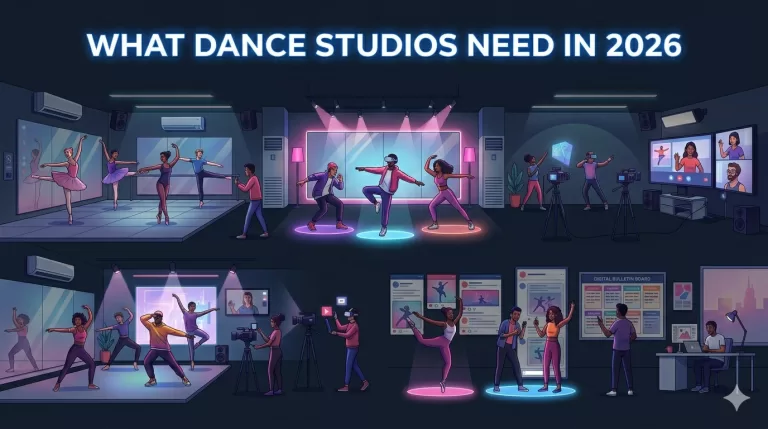
What Dance Studios Really Need in 2026 Dance studios in 2026 are operating in a very different environment compared to just a few years ago. It is no longer just about running classes and teaching choreography. Today's studios are dealing with higher parent expectations, faster communication demands, more complex schedules, increased competition, and growing administrative…
-
-
Dance Studio Scheduling Mistakes That Cost You Students (And Money)
Dance Studio Manager helps reduce scheduling guesswork by tying each class schedule to real studio data. Instead of placing classes based on instinct alone, studios can review assigned students, attendance status, instructor assignments, class capacity, and schedule-level details in one place. For a broader look at how the platform handles recurring class setup, calendars, and…
-
-
Moneris Payment Processing
Moneris Payment Processing for Dance Studio Manager A strong Canadian payment option for studios that want secure online billing, recurring payments, and reliable in-person collection. Moneris gives Dance Studio Manager customers a payments story that fits Canada especially well, combining online payments, payment devices, gateway and API tools, and fraud-focused support in a processor brand…
-
Paystri Payment Processing
Paystri Payment Processing for Dance Studio Manager Integrated payments built for studios that want secure online billing, recurring tuition, and a smoother parent payment experience. Paystri gives Dance Studio Manager customers a modern processor story centered on hosted payment forms, recurring billing, tokenization, payment devices, and strong customer support without making your team fight a…
-
-
-
-
-
-
-
-
-
-