Paso Doble: The Dance of Fire and Pride
The Moment the Music Hits
Think dancing is all smiles and sparkles? Think again.
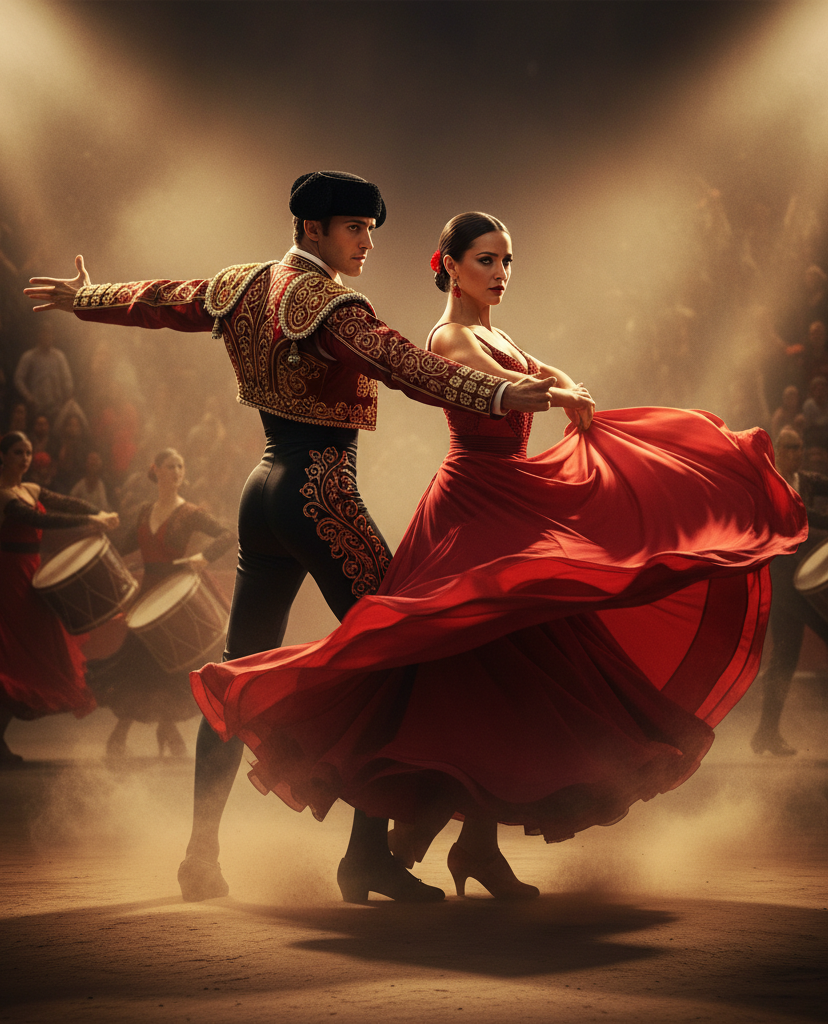
When the first drumbeat of Paso Doble hits, it doesn’t invite you to glide or sway — it commands you to fight. The floor becomes an arena. Every stomp echoes like a heartbeat before battle. Every glance, every pose, carries the weight of pride, control, and unshakable confidence.
In Paso Doble, smiling is forbidden. One grin, and you’ve lost the story. This is not a dance of joy — it’s a dance of power.
And yet, despite its fierce Spanish soul, Paso Doble’s roots don’t actually begin in Spain. They trace back to France, where musicians captured the rhythm of the bullring in music long before dancers turned it into the dramatic spectacle it is today.
Paso Doble is the dance of contradictions — elegance and aggression, grace and domination, all moving to the heartbeat of a matador’s march.
The Origins: Born in France, Inspired by Spain
The name Paso Doble translates to “double step” in Spanish, referring to the quick marching rhythm that drives the dance. But here’s the twist most people don’t expect: Paso Doble originated in France, not Spain.
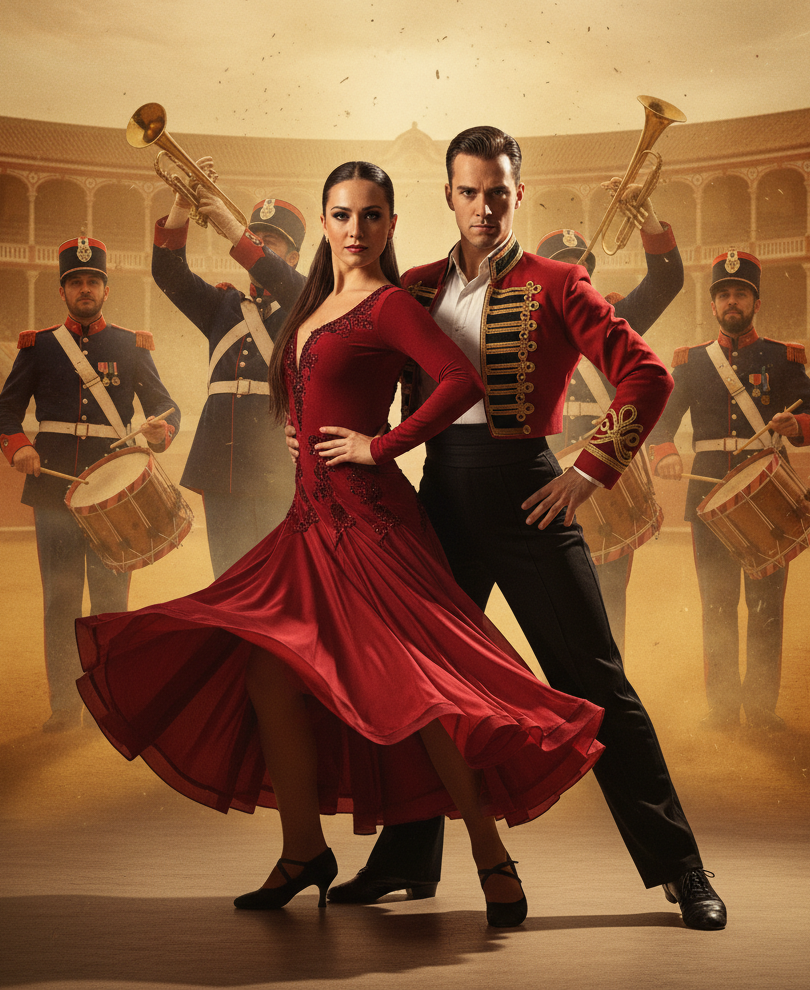
In the late 18th and early 19th centuries, French military bands began composing pieces that mimicked the rhythm and drama of Spanish bullfights. The music — full of trumpets, percussion, and marching energy — was designed to evoke courage, spectacle, and control.
As these tunes spread across Europe, they found their way into Spanish bullfighting arenas, where they accompanied the matador’s grand entrance. The audience began associating that rhythm with the passion and danger of the bullfight.
By the early 20th century, ballroom choreographers took that same rhythm and transformed it into a partner dance — turning the matador’s story into a duet between leader and follower. Thus, the Paso Doble as we know it today was born: part French march, part Spanish drama, entirely passion.
The Story on the Dance Floor
What makes Paso Doble mesmerizing isn’t just the footwork — it’s the story.
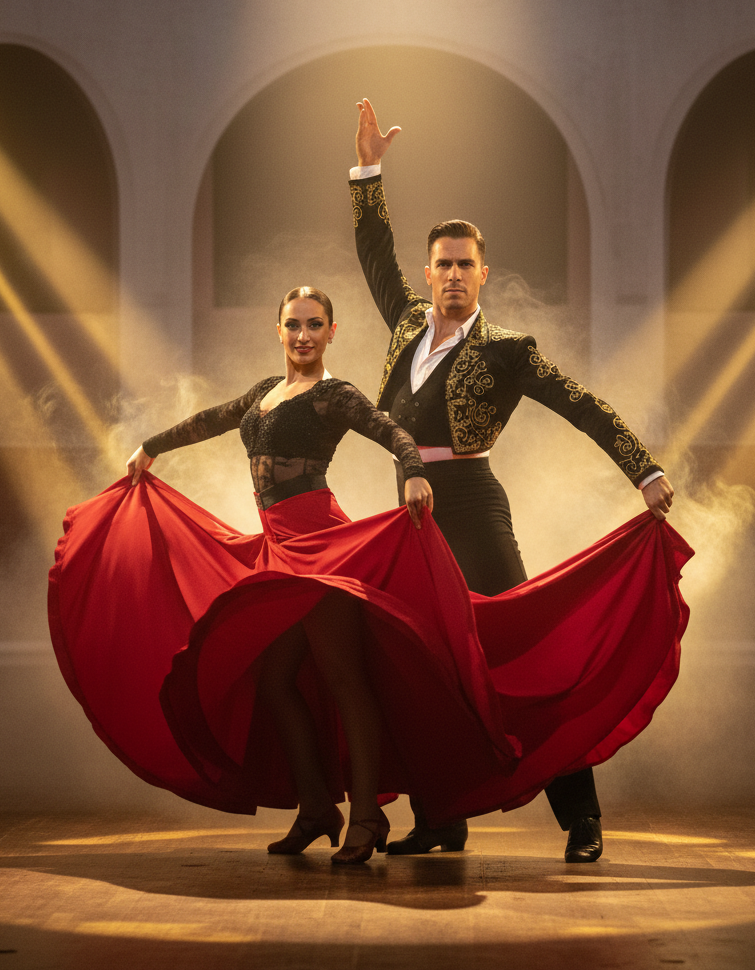
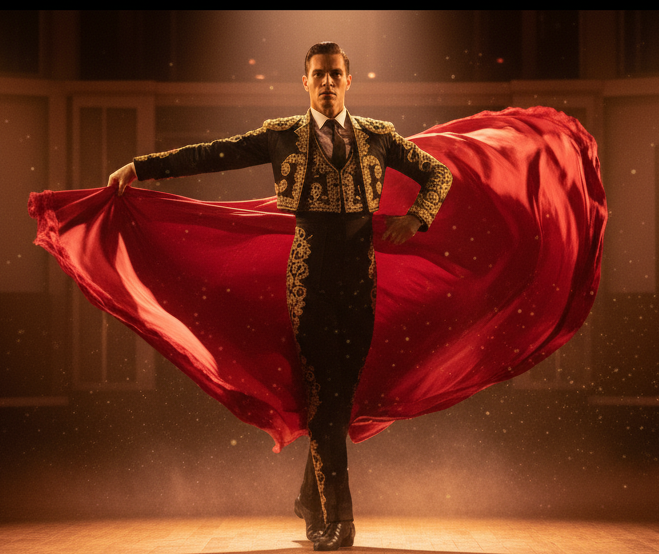
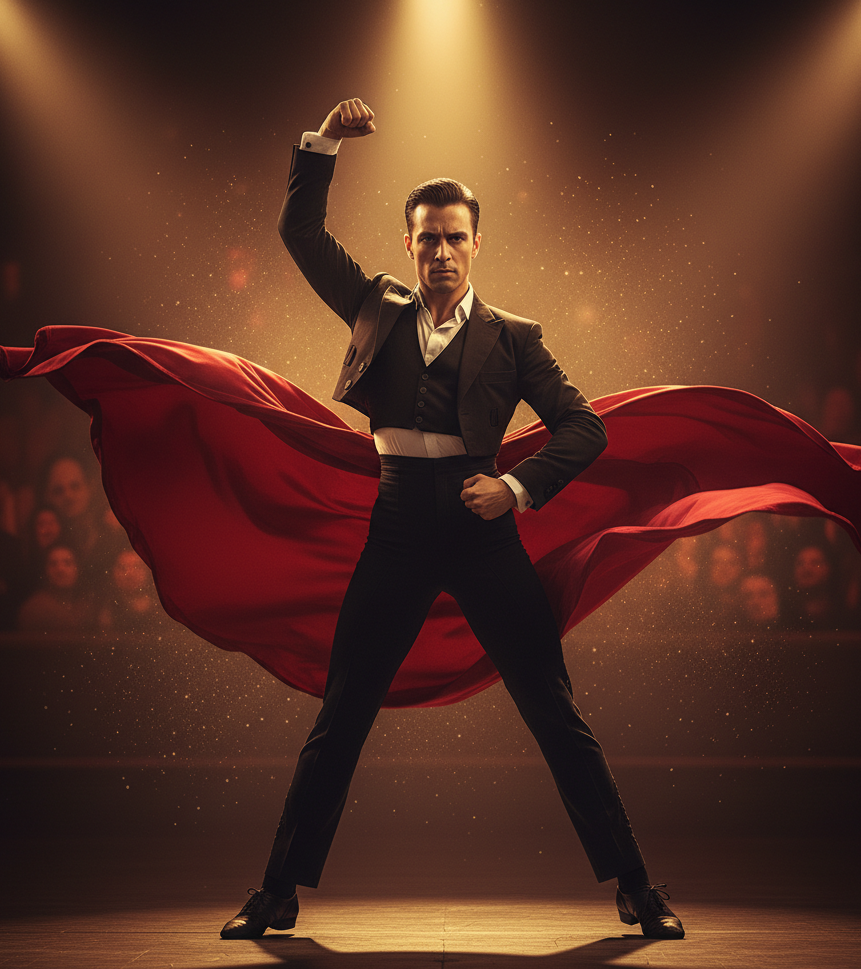
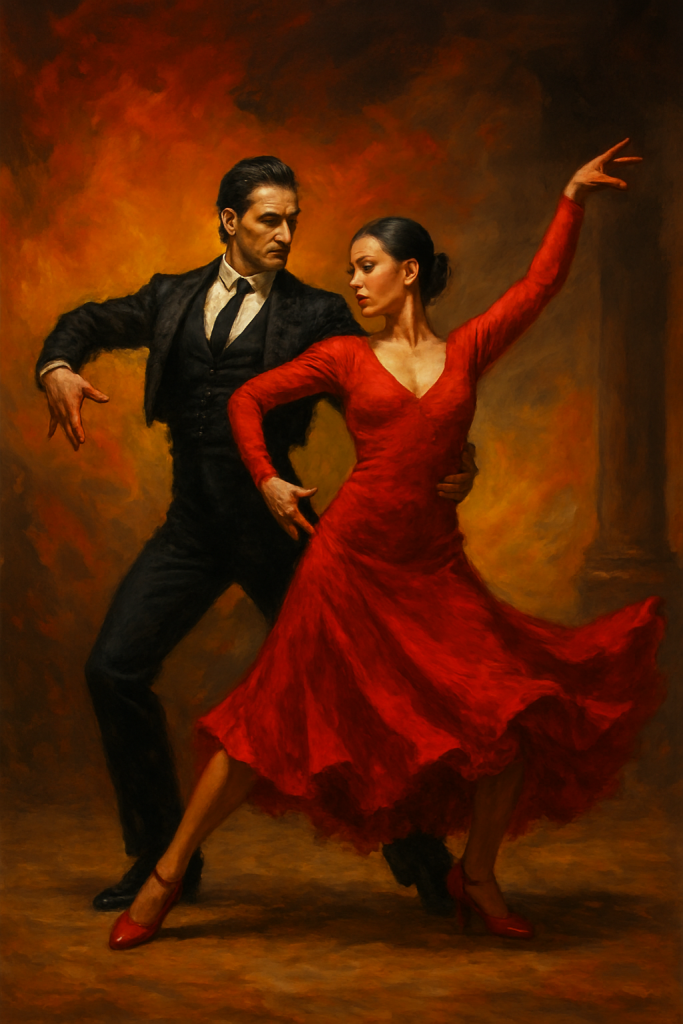
In the world of Paso Doble, the leader embodies the matador — proud, fearless, commanding the space. The follower represents the cape, swirling with energy and grace, simultaneously yielding and resisting, never truly submissive.
Their relationship on the dance floor mirrors the intense push and pull of power, control, and emotion. Every turn, every flick of the wrist, every stomp of the foot tells a chapter of that bullfight — without ever needing words.
It’s one of the few ballroom dances that isn’t about romance or love. Instead, it’s about pride, respect, and spectacle. The energy between the partners isn’t affectionate — it’s electric.
The Music: A March of Fire and Drums
If you’ve ever felt the pulse of Paso Doble music, you know it’s impossible to stand still. The rhythm is sharp, military, almost cinematic. The tempo — around 120 to 130 beats per minute — mirrors a march, not a waltz.
This beat gives Paso Doble its unmistakable intensity. Each stomp, known as an appel, punctuates the rhythm like a drum. It’s the sound of defiance — the dancer’s challenge to the audience, or to the imaginary bull.
Traditional Paso Doble music often draws from Spanish bullring marches, such as the iconic España Cañí — a piece so linked to the dance that its first few notes are instantly recognizable to ballroom fans around the world.
While the melody evokes Spain, its precision and tempo come from French structure — a fusion that gives Paso Doble its distinct identity: French discipline wrapped in Spanish fire.
Attitude Over Smile: The Paso Doble Expression
Unlike cha-cha, jive, or samba — where smiles and charm win the crowd — Paso Doble dancers must hold an intense, serious expression throughout the performance.
Why? Because emotion in Paso Doble doesn’t come from the face. It comes from presence.
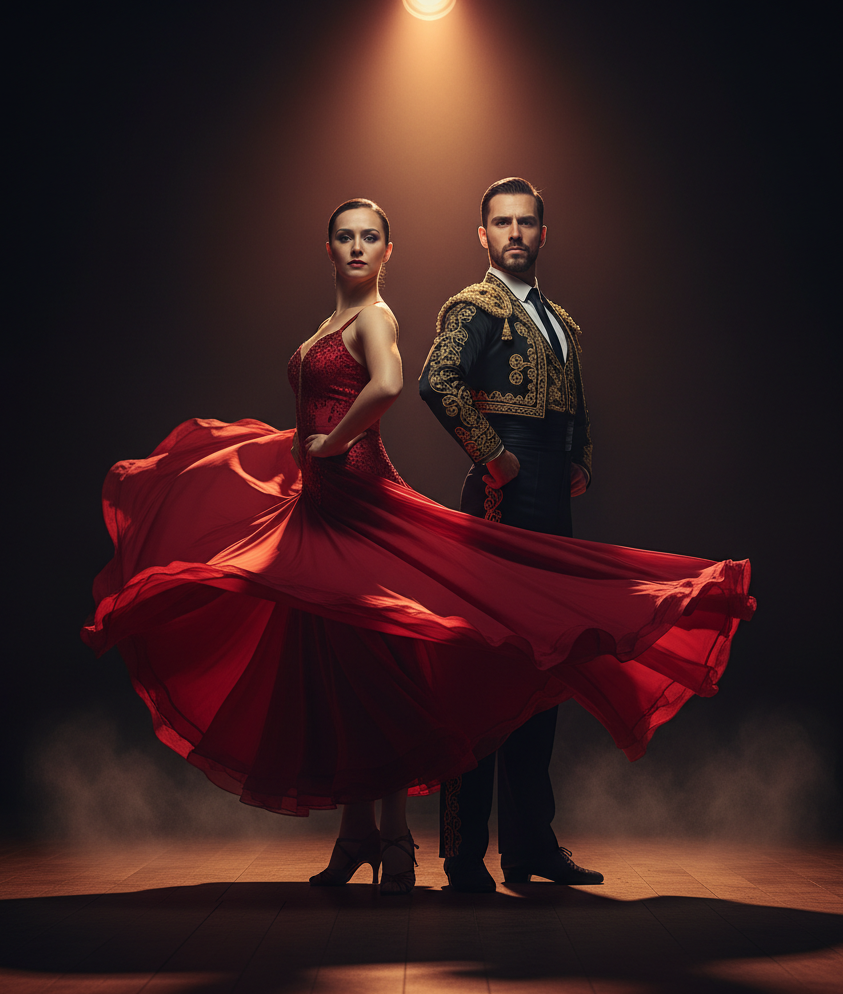
A good Paso Doble dancer doesn’t need to smile to captivate. Their power lies in eye contact, posture, and precision. Their energy radiates through stillness, tension, and explosive release.
Judges often say Paso Doble “rewards attitude as much as technique.” You can have flawless steps, but if you don’t look like you’re ready to fight a bull and own the arena, the performance falls flat.
Confidence, in this dance, isn’t part of the score — it is the score.
The Technique Behind the Drama
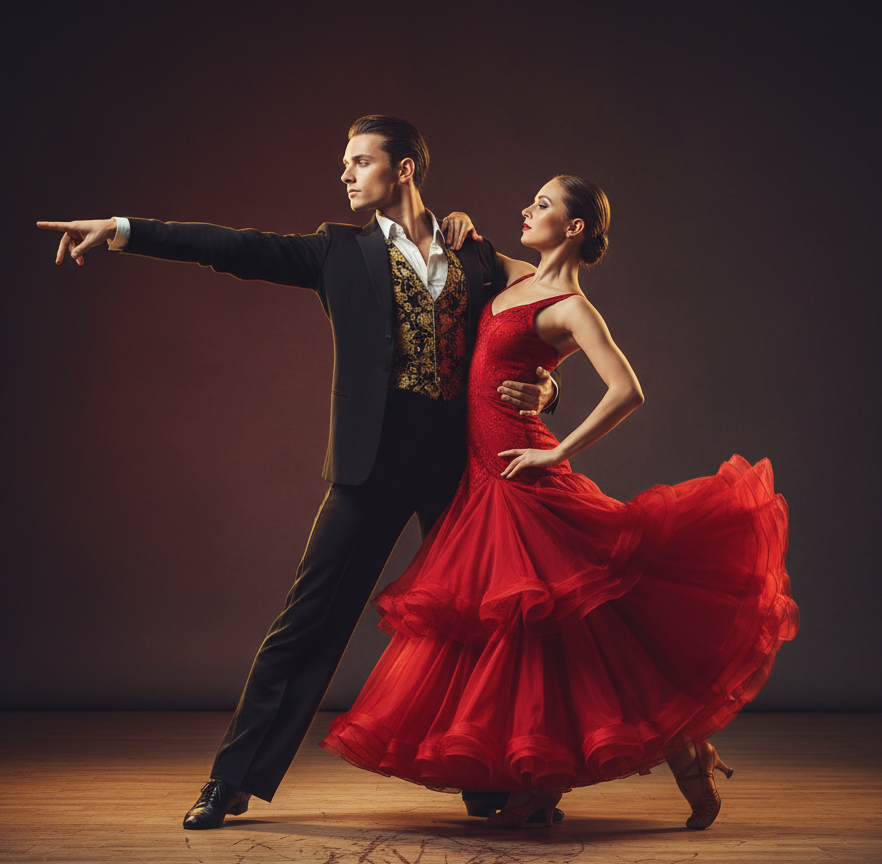
Paso Doble technique is sharp, grounded, and powerful. Every step has purpose; every movement, direction.
Posture: The chest is lifted, shoulders back — creating a sense of command.
Footwork: Dancers use strong heel leads and precise stomps, maintaining rhythm and authority.
Shaping: The body curves dramatically to emphasize contrast between stillness and motion.
Lines: The arms are extended with intention, mimicking the matador’s cape as it flows.
Connection: Partners stay close yet controlled — there’s tension, but never chaos.
The challenge? Maintaining intensity while keeping technique clean. Paso Doble isn’t about random passion — it’s disciplined fire.
Each motion must tell the story clearly. The audience should see confidence, not aggression; elegance, not chaos.
The Stomp That Echoes Like a Drum
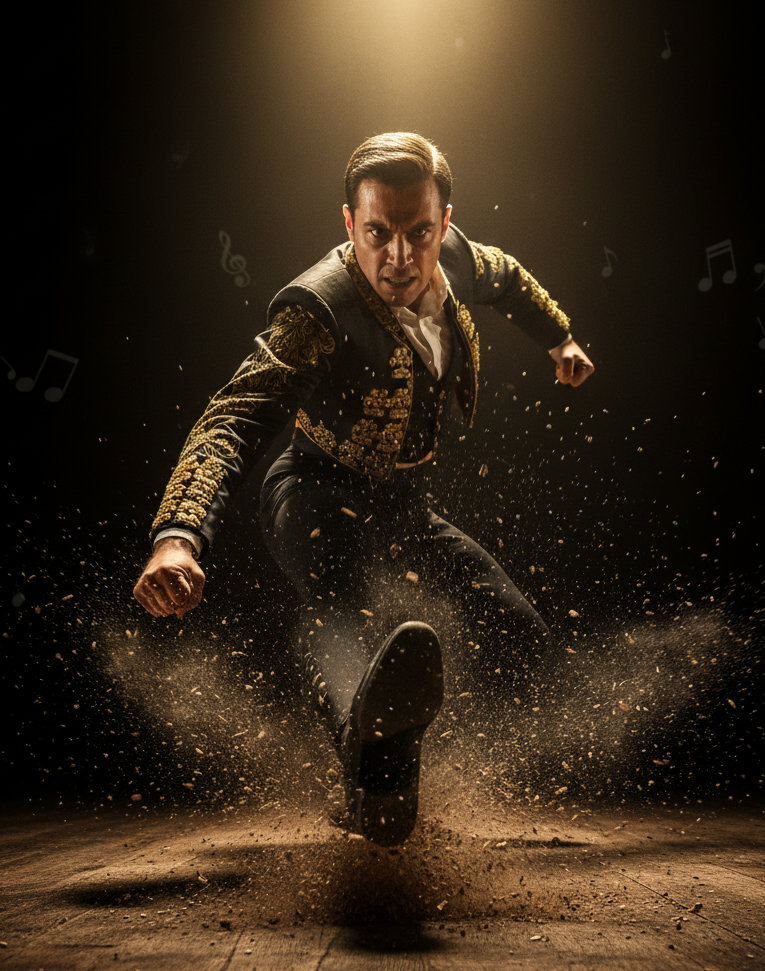
The appel — the stomp — is the heartbeat of Paso Doble.
It’s a single, commanding step where the dancer stamps their foot against the floor, marking dominance and control. In that instant, silence and sound collide.
It’s not random noise; it’s punctuation. The appel signals changes in choreography, emotion, or intent — like a drum signaling troops into battle.
When paired with the music’s booming percussion, the stomp becomes the link between dancer and rhythm, human and music. That’s why the first stomp often lands right before the first spoken word or line in a Paso Doble narration — it grabs the audience by the chest.
From Bullring to Ballroom
Paso Doble might be inspired by the bullring, but in ballroom, it’s an art form — stylized, safe, and symbolic.
While real bullfighting has sparked cultural debate, Paso Doble keeps the spirit of the fight without the violence. It transforms danger into artistry.
Over time, the dance evolved through competition circuits, especially in International Latin Ballroom, where it stands alongside cha-cha, rumba, samba, and jive. In competitions, Paso Doble is often the finale dance — the one that tests a dancer’s endurance, posture, and character all at once.
That’s no accident. Paso Doble is meant to end strong — like the matador’s final flourish in the arena.
Paso Doble on Stage and Screen
From ballroom championships to shows like Dancing with the Stars and Strictly Come Dancing, Paso Doble has become a crowd favorite. It’s the moment in the show when everything feels larger than life — music blaring, lights flashing, dancers fierce and unyielding.
On screen, Paso Doble routines often become viral because of their intensity. A single look, a flick of a cape, a perfectly timed stomp — all can send chills down the spine of viewers who might not even know the story behind it.
The drama translates effortlessly through camera and screen. For social media viewers, it’s the emotion that hooks them — the raw, cinematic energy that makes it impossible to scroll past.
Why Confidence Is Everything
If you ask any professional dancer, they’ll tell you: Paso Doble isn’t just steps — it’s attitude in motion.
You can’t fake it. You either step onto the floor like you own the arena, or the audience will see right through you. The dance demands conviction — and that’s what makes it timeless.
Paso Doble doesn’t reward perfection. It rewards belief.
Belief that you are the matador.
Belief that you control the cape.
Belief that this dance is your stage, your moment, your victory.
That’s why even viewers who don’t dance often feel moved watching Paso Doble. It taps into something universal — pride, courage, and the will to stand tall against fear.
Modern Interpretations
While traditional Paso Doble holds fast to its roots, modern choreographers continue to reinvent it — blending flamenco footwork, contemporary storytelling, and cinematic staging.
In some performances, dancers reinterpret the roles entirely:
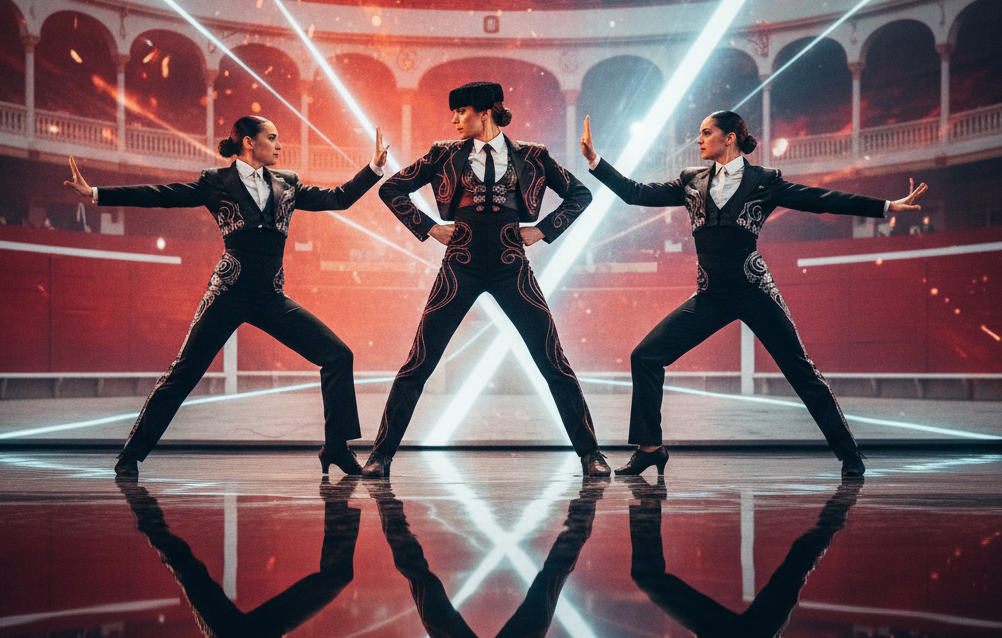
The woman as the matador, taking command.
Both partners as dueling equals, symbolizing inner conflict rather than a bullfight.
These reinventions show how Paso Doble’s core energy — fire, pride, defiance — transcends tradition. Whether danced in ballrooms, on TikTok, or on global stages, it keeps evolving without losing its identity.
The Legacy of Fire and Pride
At its heart, Paso Doble is a reminder that dance can be more than beauty — it can be power.
It’s about how you walk into a space, how you claim your ground, how you hold yourself when eyes are on you. Paso Doble teaches us that strength and elegance are not opposites — they’re partners.
Every stomp, every turn, every still moment becomes a declaration:
I am here. I am unshaken.
That’s why Paso Doble continues to captivate audiences worldwide — from professional competitions to viral short videos. It’s not just about dancing; it’s about embodying courage.
So the next time you see Paso Doble — whether on a TV stage or a social media clip — look closer. Watch the fire behind their eyes. Notice the pride in their stance. Feel the power in each beat.
Because Paso Doble isn’t just danced…
It’s lived.
Paso Doble is one of those rare art forms that doesn’t ask for permission to be bold. It doesn’t beg to be liked — it commands respect.
From its French origins to its Spanish inspiration, from the bullring to the ballroom, Paso Doble has evolved into a dance that celebrates control, courage, and pride in motion.
It reminds dancers and audiences alike that confidence is not arrogance — it’s owning your story, your space, and your rhythm.
And maybe that’s why Paso Doble resonates so deeply in today’s world. Because at its core, it’s about facing your fears, standing tall, and meeting every challenge head-on — with fire in your heart and pride in your soul.
-
-
-
-
Signs Your Dance Studio Needs Better Management Software
Signs Your Dance Studio Needs Better Management Software Most dance studios do not realize they have outgrown their current system until the same problems keep showing up: missed payments, messy schedules, parent questions, attendance gaps, and too many hours spent fixing admin details. Spreadsheets and basic calendars may work when your studio is small. But…
-
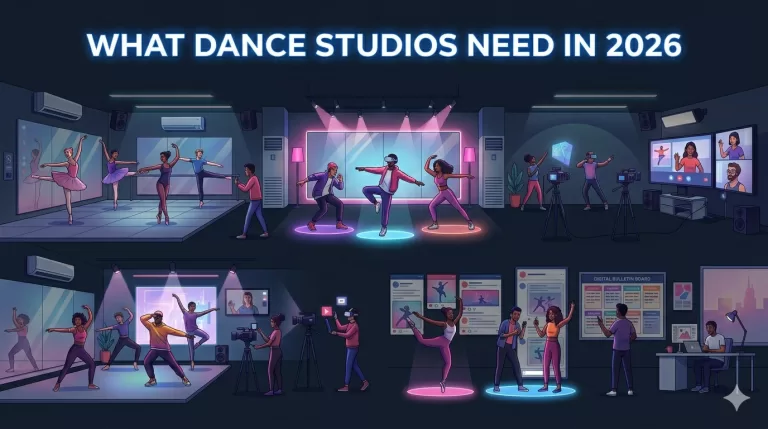
What Dance Studios Really Need in 2026
What Dance Studios Really Need in 2026 Dance studios in 2026 are operating in a very different environment compared to just a few years ago. It is no longer just about running classes and teaching choreography. Today's studios are dealing with higher parent expectations, faster communication demands, more complex schedules, increased competition, and growing administrative…
-
-
Dance Studio Scheduling Mistakes That Cost You Students (And Money)
Dance Studio Manager helps reduce scheduling guesswork by tying each class schedule to real studio data. Instead of placing classes based on instinct alone, studios can review assigned students, attendance status, instructor assignments, class capacity, and schedule-level details in one place. For a broader look at how the platform handles recurring class setup, calendars, and…
-
-
Moneris Payment Processing
Moneris Payment Processing for Dance Studio Manager A strong Canadian payment option for studios that want secure online billing, recurring payments, and reliable in-person collection. Moneris gives Dance Studio Manager customers a payments story that fits Canada especially well, combining online payments, payment devices, gateway and API tools, and fraud-focused support in a processor brand…
-
Paystri Payment Processing
Paystri Payment Processing for Dance Studio Manager Integrated payments built for studios that want secure online billing, recurring tuition, and a smoother parent payment experience. Paystri gives Dance Studio Manager customers a modern processor story centered on hosted payment forms, recurring billing, tokenization, payment devices, and strong customer support without making your team fight a…
-
-