Toxic Dance Studios: Signs, Causes, and How to Fix Them
Dance should be a place where students feel inspired, supported, and confident. But for many dancers today, that’s not always the reality.
More students and parents are speaking out about negative experiences inside studios—ranging from favoritism to poor management. In some cases, dancers even lose their passion entirely.
So what exactly makes a dance studio toxic, and how can it be fixed?
What Is a Toxic Dance Studio?
A toxic dance studio is an environment where negative behaviors outweigh support and growth. Instead of encouraging dancers, it creates stress, fear, or unfair treatment.
This can come from:
And often, it’s not just one issue—but a combination of problems.
Common Signs of a Toxic Dance Studio
1. Favoritism Among Dancers
Some students are consistently given better roles, more attention, or more opportunities—regardless of effort.
This creates:
And often, it’s not just one issue—but a combination of problems.
2. Bullying and Negative Behavior
Toxic studios often allow behaviors such as:
When these are ignored, it creates an unhealthy environment for everyone.
3. Disrespectful Teaching Style
Constructive feedback is important—but constant negative criticism or humiliation is not.
Students may feel:
4. Poor Communication and Organization
Lack of structure can also signal deeper issues.
Examples include:
This leads to confusion and frustration for both parents and dancers.
5. High Student Turnover
If many dancers leave every year, it may be a warning sign.
Healthy studios usually retain students because they feel valued and supported.
What Causes Toxic Studio Culture?
Toxic environments don’t happen overnight. They are usually caused by:
Poor Leadership
Studio owners who lack structure or accountability can create disorganized and stressful environments.
Over-Focus on Competition
When winning becomes the priority, studios may:
Lack of Clear Systems
Studios that rely on manual processes often struggle with:
This can lead to misunderstandings and frustration.
How Toxic Studios Affect Dancers
The impact goes beyond dance.
Students may experience:
For young dancers, these experiences can shape their self-esteem long-term.
How Dance Studios Can Fix These Issues
1. Build a Positive and Inclusive Environment
Encourage respect, teamwork, and support among students.
2. Set Clear Expectations
Make sure students and parents understand:
3. Improve Communication
Consistent communication helps avoid confusion and builds trust.
Studios should:
4. Focus on Growth, Not Just Performance
Celebrate progress—not just awards or rankings.
This helps students stay motivated and confident.
5. Use Structured Systems for Management
Many issues in toxic studios come from disorganization.
Studios that use dedicated systems—such as Dance Studio Manager—can better manage schedules, communication, and student data in one place. This creates a more stable and professional environment.
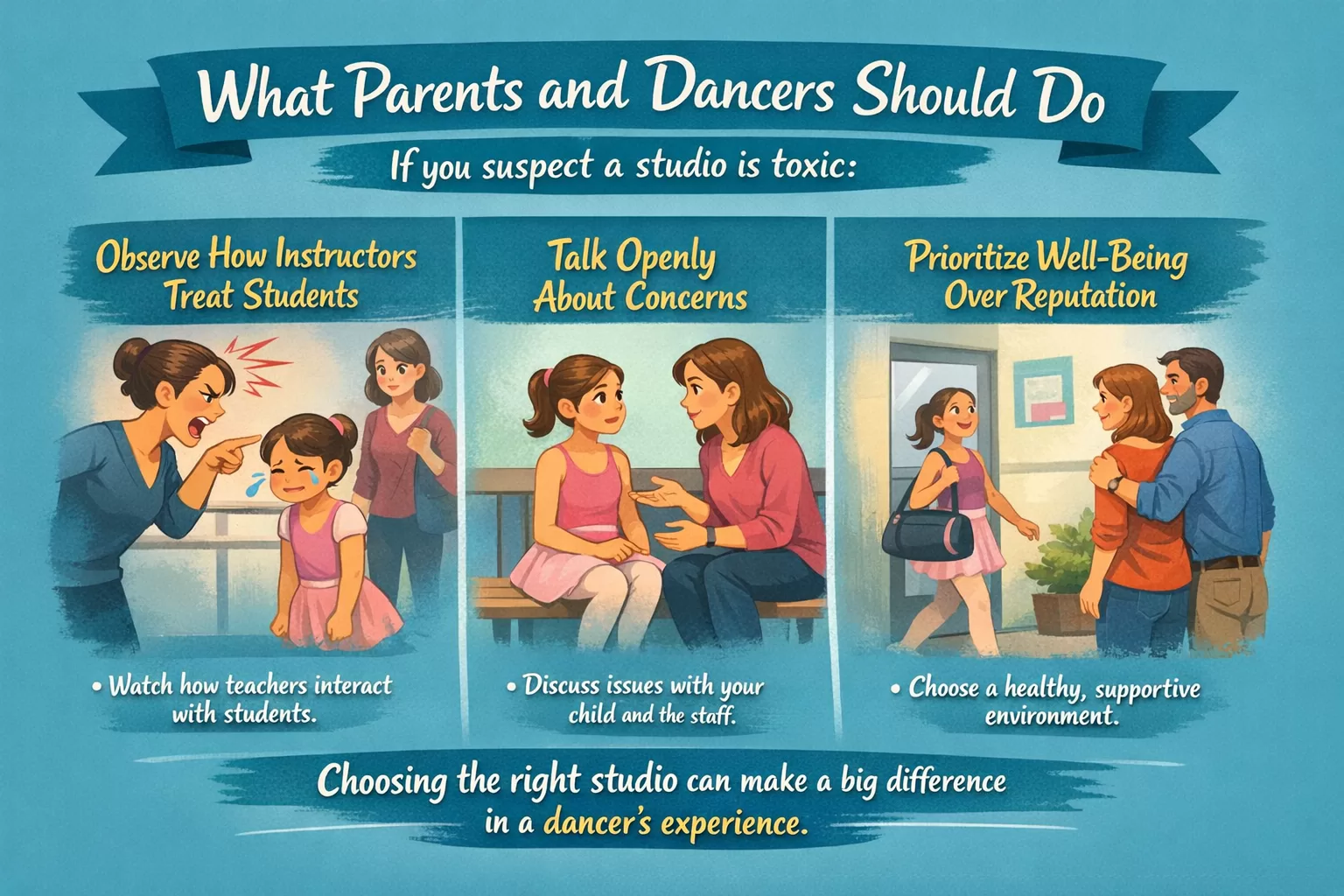
Frequently Asked Questions (FAQ)
Ready to build the alternative? Use these practical steps to create a positive dance studio culture.