The Real Cost of Manual Dance Studio Management
Many dance studios start with notebooks, spreadsheets, and handwritten receipts. In the beginning, manual dance studio management feels simple and affordable. There are no software fees, and everything seems easy to track—at least at first.
But as the studio grows, the hidden costs of manual dance studio management begin to surface. These costs don’t always appear on financial reports, yet they quietly affect revenue, time, growth, and long-term sustainability.
1. Lost Payments in Manual Dance Studio Management
When payments are tracked manually, studio owners rely on memory, notes, or spreadsheets that require constant updating.
The reality of manual dance studio management:
Parents forget payment due dates
Partial payments are missed
Balances are followed up too late—or not at all
Even small missed payments add up over time. What feels like “just a few dollars” can turn into a serious revenue leak across months or seasons.
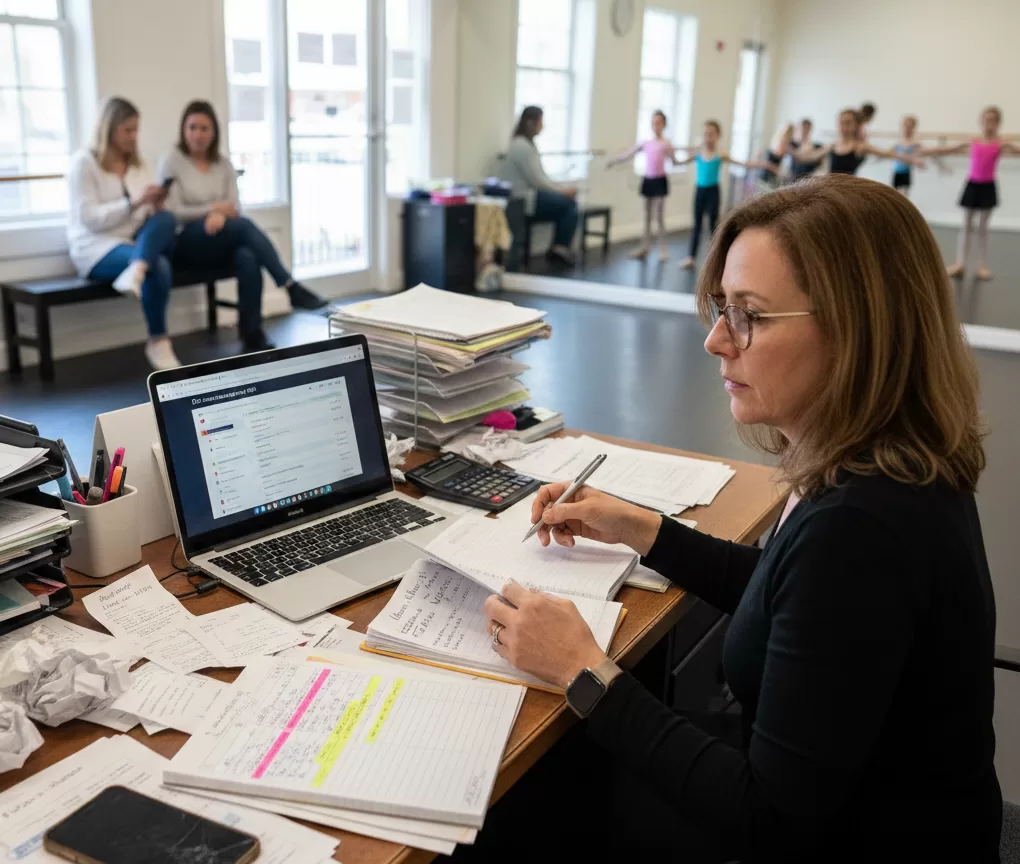
2. Admin Work Consumes Valuable Time
Manual dance studio management demands daily attention:
Checking attendance
Updating schedules
Answering parent messages
Tracking payments and absences
Every hour spent on admin is an hour taken away from teaching, improving classes, or growing the studio. Over time, this workload limits what a studio owner can realistically handle.
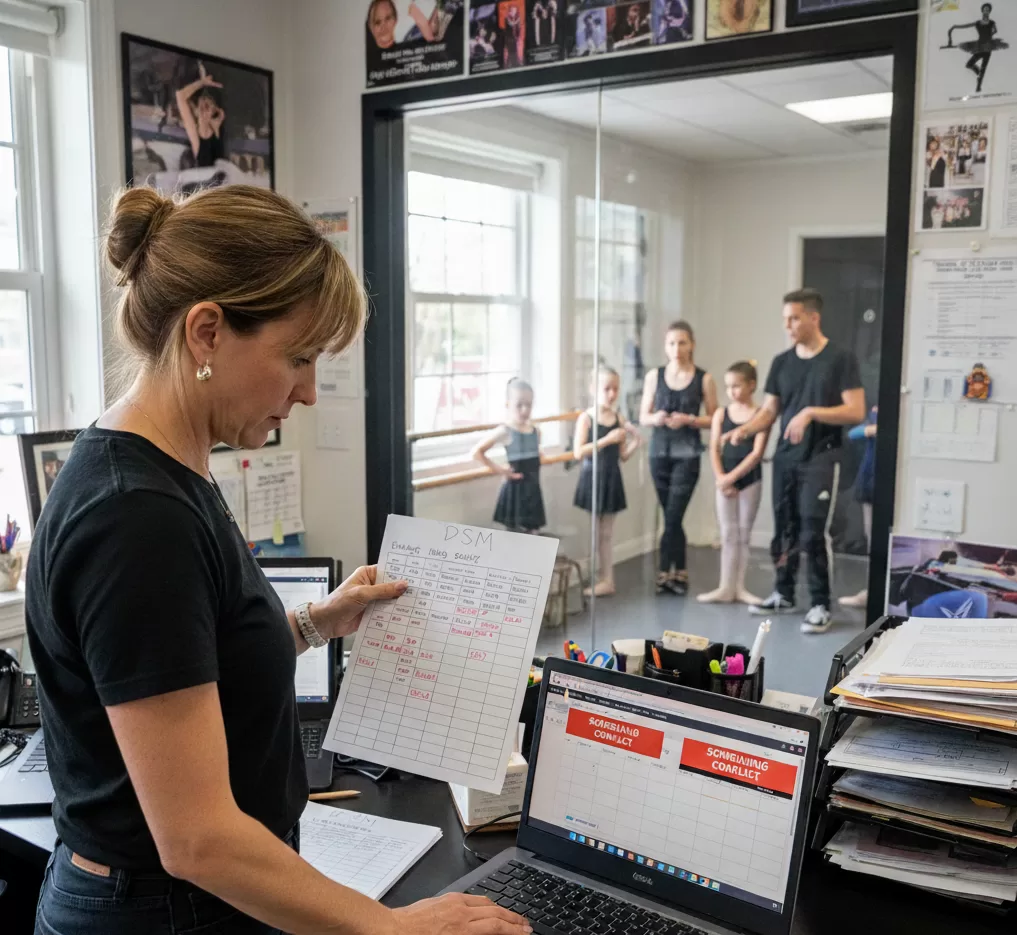
3. Human Error Is Inevitable
Even the most organized studio owners make mistakes when relying on manual systems.
Common issues include:
Double-booked rooms
Incorrect attendance records
Billing and balance errors
Missed schedule updates
These errors don’t just cause stress—they affect parent trust and staff confidence. Manual dance studio management increases the chance of mistakes simply because everything depends on manual input.
4. Growth Becomes Harder to Sustain
Manual dance studio management might work for small studios, but it struggles as enrollment increases.
Hidden growth challenges include:
Overcrowded or underfilled classes
Scheduling conflicts across rooms and instructors
Difficulty managing multiple programs
Many studios reach a point where demand grows—but operations can’t keep up. This often leads to turning students away or stretching staff too thin.
Internal link idea: See how Dance Studio Manager features can help scale your studio.
5. Burnout Is the Biggest Hidden Cost
One of the most overlooked consequences of manual dance studio management is mental load.
Studio owners often:
Constantly double-check records
Worry about forgetting important details
Feel unable to fully step away from work
Over time, this pressure leads to burnout. The studio may still be running—but not sustainably.
Manual dance studio management may seem cheap at first. But the real costs appear later—in lost income, wasted time, mistakes, limited growth, and burnout.
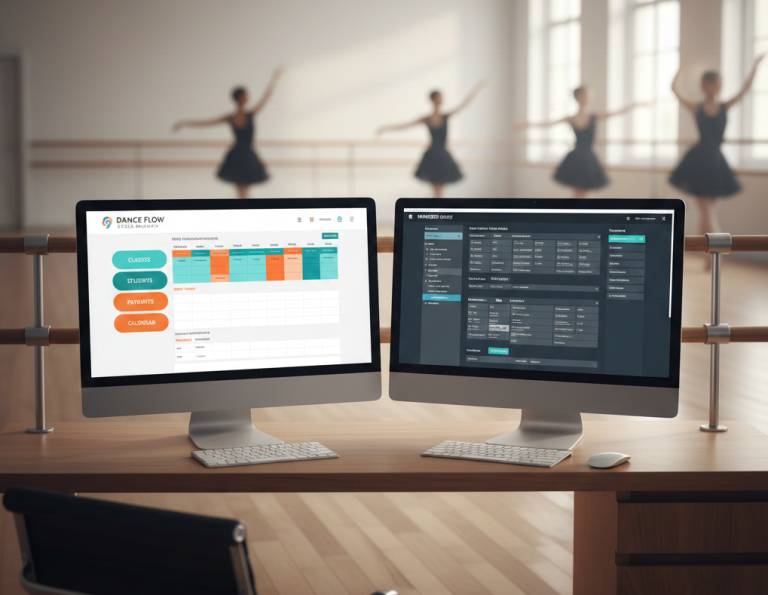
With Dance Studio Manager (DSM), running your studio becomes easier. Payments are tracked automatically. Schedules stay organized. Attendance is accurate. Communication flows smoothly. Studio owners no longer need to rely on memory or manage multiple systems.
DSM doesn’t replace the heart of your studio. It removes the stress of manual studio management and lets teaching, creativity, and community thrive.
-
-
-
-
-
-
-
Payment Processors Compared for Dance Studio Manager (DSM)
PROCESSORS BEST FOR PRICING MODEL HARDWARE WHY IT WORKS WELL INSIDE DSM Paystri (DSM Preferred Partner) Studios wanting personalized rates, high customer support, and a strong DSM relationship. “Meet or beat” pricing for DSM users Often competitive for both low and high-volume studios Chip / swipe / tap readers (varies by region) DSM has a…
-
-
-
-
Are Dancers the Ultimate Multi-Sport Athletes?
Sport Key Skills Overlap with Dance Basketball Vertical jump, agility, coordination Jump height, lower-body strength Soccer Endurance, footwork, rhythm Aerobic capacity, movement timing MMA/Boxing Reaction time, body control Real-time adaptation, neural speed Gymnastics Balance, flexibility, choreography Shared technical elements Figure Skating Flow, control, artistry Same fusion of sport + art Track & Field Explosive power,…
-
-
-
-