Studio resource
This Dance Was Banned for Being Too Intimate
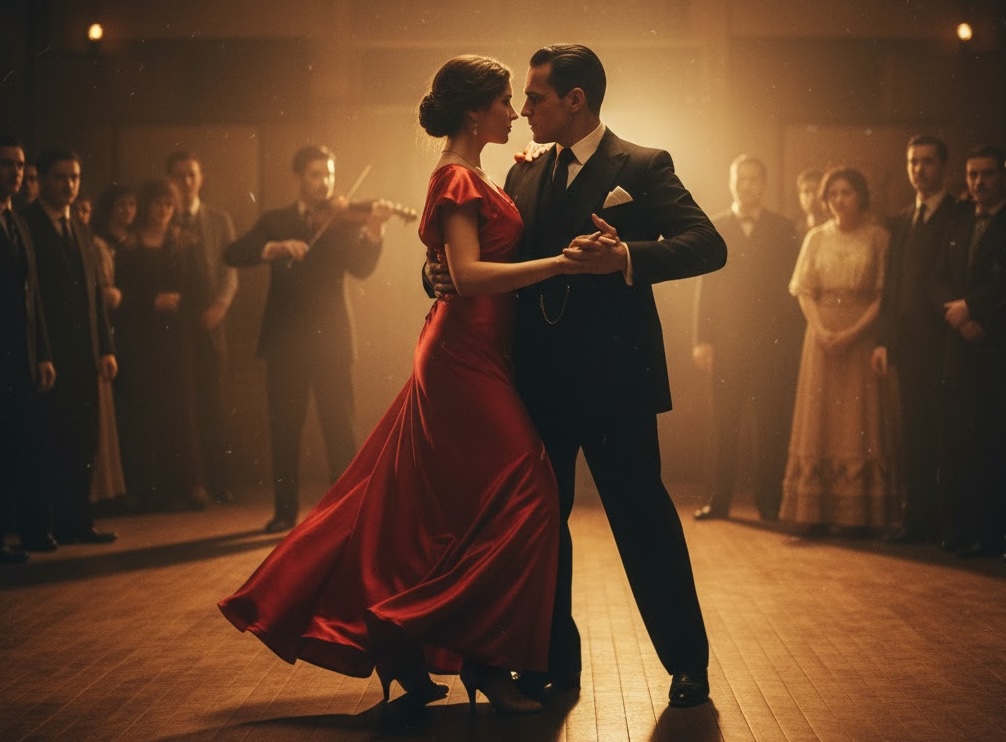
The lights dim. A violin hums low. Two silhouettes lock eyes across the floor—her breath catching, his hand hovering just above her waist. The room stills. Then, with one bold step, they draw close—too close for polite society.
Tango’s story began far from the glittering ballrooms we know today.
Tango’s danger lay in its closeness. Unlike the proper waltz, it demanded physical connection. Partners danced chest to chest, eyes locked, bodies breathing as one. Every step carried emotion—tension, longing, surrender.
At the heart of Tango lies its music—a haunting mix of melancholy and fire.
Tango isn’t memorized; it’s felt. Dancers learn to listen more than they move. The lead invites. The follower interprets. Together, they build a silent conversation through motion.
By mid-century, Tango had evolved again. Hollywood captured its allure through films featuring Rudolph Valentino and other silver-screen icons. Audiences watched lovers glide beneath a spotlight, their chemistry simmering between movement and restraint.
Tango is a paradox: both control and chaos, passion and precision.
Today, Tango thrives in studios, competitions, and milongas from Buenos Aires to Seoul. Yet even in its modern form, it retains its rebellious soul.
Tango’s transformation from scandal to art mirrors humanity’s own evolution. We once feared what we now celebrate.
See what a smoother studio day feels like.
Explore DSM free, with no commitment.