Studio resource
Endless Rehearsals: The Hidden Reality of Professional Ballroom Dancing
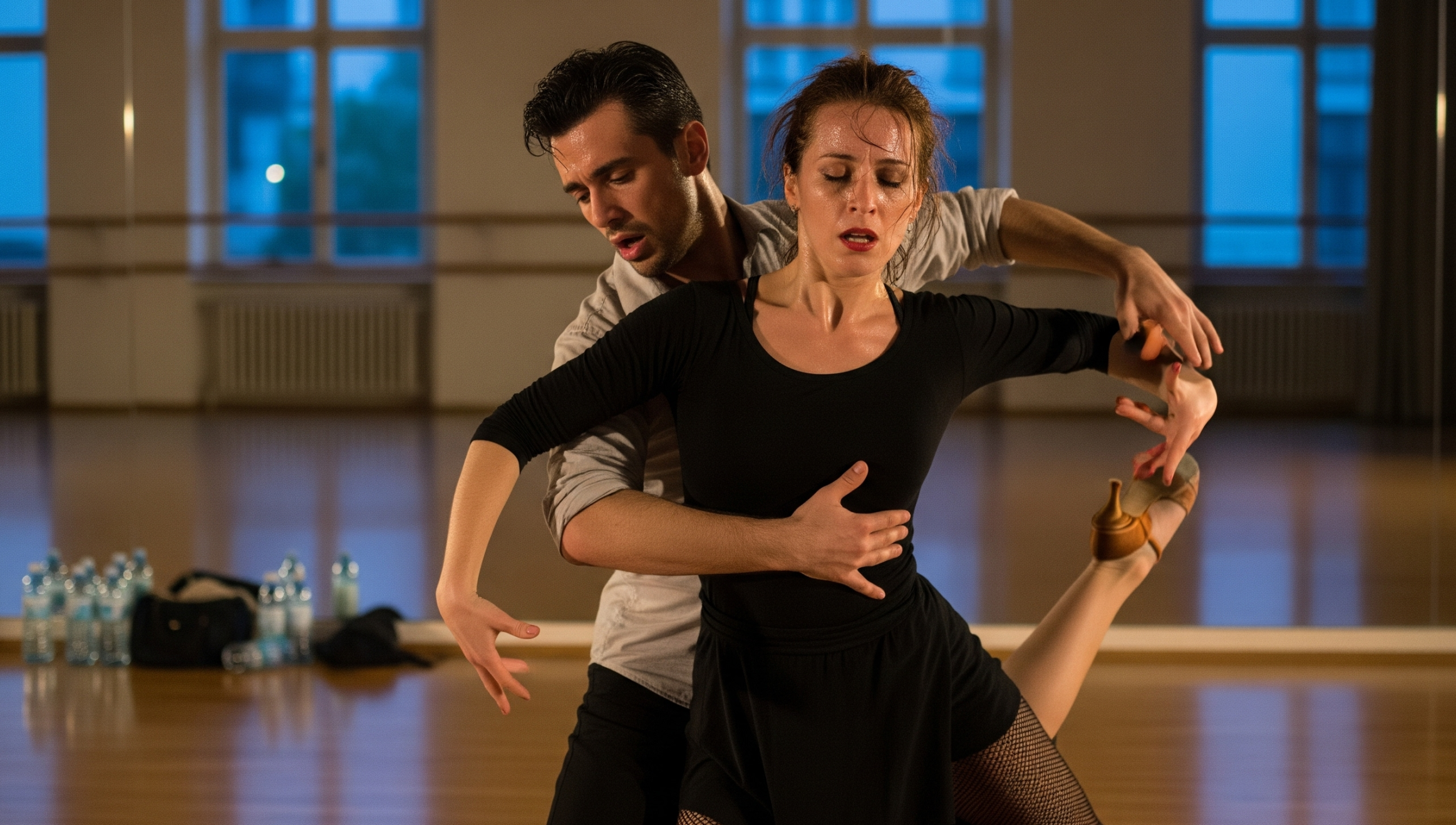
Professional ballroom dancers spend hours upon hours practicing daily. For competitive pairs, it is not unusual to dedicate 6–10 hours a day to rehearsals, meticulously drilling the same sequences over and over. This repetition is not for vanity—it’s a necessity. In competitions where fractions of a second and subtle posture shifts can determine winners, even a tiny misstep can cost points or ruin an otherwise perfect performance.
Rehearsals test not just muscles and memory, but emotions. The pressure to succeed is immense. Many competitive dancers begin training in childhood, sacrificing the typical milestones of youth for studio floors and competition halls. By the time they reach the professional circuit, the expectation is perfection.
To grasp the intensity of rehearsal culture, imagine a typical day in the life of a professional dancer. The morning often begins with conditioning—stretching routines, weight training, or cardio exercises designed to prepare the body for the long day ahead. Mid-morning transitions into technique sessions, where couples dissect their choreography, focusing on posture, frame, footwork, and musical timing. Coaches frequently interrupt, offering corrections that lead to yet another round of repetition.
The intensity of rehearsal culture is not a modern invention. Ballroom dancing, as a competitive sport, has long demanded rigorous preparation. When competitions became formalized in Europe in the early 20th century, the standard of precision was set high. Scoring systems rewarded flawless technique, posture, and synchronization, leaving no room for improvisation or sloppiness.
All of this practice funnels toward a singular goal: competition. In events like the Blackpool Dance Festival, considered the pinnacle of ballroom, the margin between victory and defeat is razor-thin. Judges assess everything—the angle of a wrist, the rise and fall of a waltz, the synchronization of spins.
The hidden costs of endless rehearsal extend beyond sweat and injuries. Financially, ballroom dancing is one of the most demanding art forms. Studio rentals, private coaching, costumes, travel, and competition fees add up quickly. Many dancers pour their savings—or their families’ savings—into sustaining their careers.
Those who live this life often describe it with a mix of pride and exhaustion. “Rehearsals are both my favorite and hardest part of being a dancer,” one competitor admitted. “I love the craft, but sometimes it feels like my life is nothing but footwork and repetition.” Another noted, “People see the performance, but they don’t see the sweat, pain, and tears behind it. We repeat steps over and over until it becomes instinct, but it’s exhausting.”
Given the punishing reality of endless rehearsals, one might wonder why dancers continue. The answer lies in the moments when all the hours of repetition coalesce into art. When the music begins, and the audience gasps as a couple glides effortlessly across the floor, dancers experience a fleeting moment of transcendence. The exhaustion fades, the sacrifices recede, and all that remains is the beauty of the performance.
Ballroom dance is often described as the art of making the difficult look easy. Yet behind every effortless twirl, every breathtaking lift, and every graceful smile lies a story of sweat, repetition, and sacrifice. Endless rehearsals are the invisible foundation upon which ballroom’s glittering façade is built.
See what a smoother studio day feels like.
Explore DSM free, with no commitment.