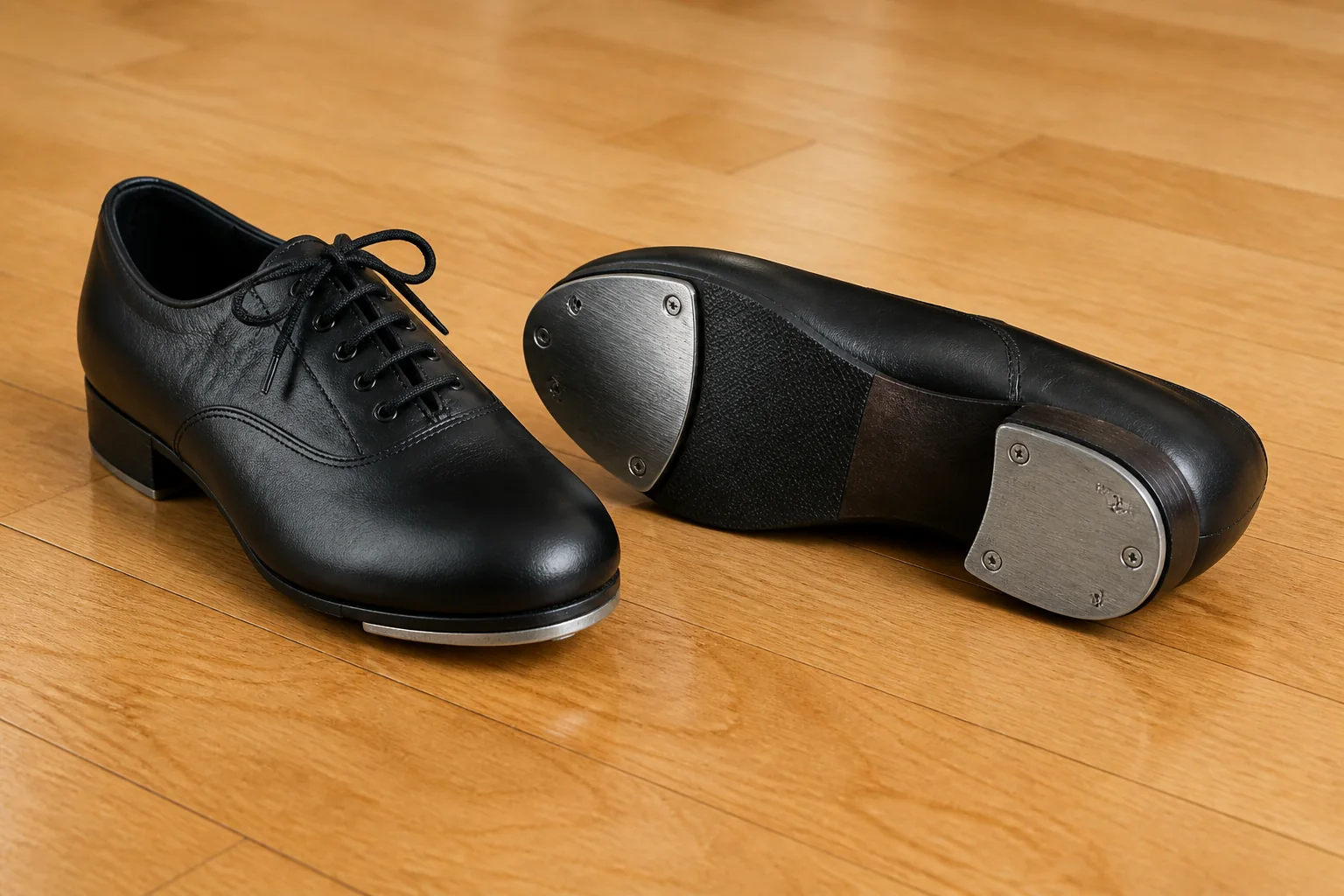
No two pairs of tap shoes sound exactly alike because the taps, shoe construction, fit, floor, room acoustics, and dancer all shape each strike. A tap shoe is only one part of the instrument. The dancer and the floor complete it.
That is why the same shuffle can sound bright and crisp in one studio, soft and woody in another, and muddy when a shoe does not fit correctly. The differences are not necessarily signs that one pair is “good” and another is “bad.” They are different voices—and tap dancers learn to control those voices.
If you are curious about how this percussive art form developed, start with our companion history, Tap Dancing: When Movement Became Music. This guide focuses on the practical question: what actually creates the sound?
Tap shoes are musical instruments
Modern tap shoes usually have a metal plate under the ball of the foot and another under the heel. The Library of Congress notes that early tap styles used hard-soled shoes, clogs, and hobnailed boots; metal plates appeared on Broadway shoes in the early decades of the twentieth century.
When a tap meets the floor, the impact starts a vibration. The metal plate, the shoe beneath it, the floor surface, the layers below the floor, and even the air in the room affect what reaches your ears. The initial click is only the beginning. What makes the sound feel full, thin, dry, ringing, or dull is the way that energy travels through the whole system.
Think of the taps as the strings, the shoe as part of the instrument’s body, and the floor as the sounding board. Change any one of them and the voice changes.
Toe taps and heel taps have different voices
The toe plate sits beneath the broad ball of the foot. The heel plate is attached to a smaller, more rigid heel block. Their shapes, sizes, mounting surfaces, and contact angles are different, so they naturally produce contrasting sounds.
A toe strike can be made with the inside edge, outside edge, front edge, or a broader part of the plate. A heel drop usually delivers force through a more compact area. Those are tendencies, not fixed musical notes: two shoe models may reverse the contrast, and a skilled dancer can coax several colors from the same plate.
This is one reason tap vocabulary sounds musical. A flap, shuffle, heel drop, toe stand, and dig do not merely happen at different times; they also use different parts of the shoe and different ways of contacting the floor.
The plates and their attachment matter
Plate material, thickness, size, shape, and attachment all affect the attack and resonance. Some beginner shoes use firmly fixed taps. Other models allow a qualified teacher or shoe professional to make small adjustments. A securely mounted plate tends to give a clean, controlled attack. A plate that is intentionally designed and correctly adjusted to resonate may have more ring.
A random rattle is not the same as useful resonance. A screw head that protrudes, a plate that shifts, or hardware that catches the floor can damage the surface and create a fall risk. Beginners should not loosen taps simply to make them louder. If a shoe starts buzzing or one plate suddenly sounds different, stop and let a teacher or dance-shoe professional inspect it.
Shoe construction changes the sound and feel
The metal taps get the attention, but the rest of the shoe controls how force reaches them.
- Full sole or split sole: A full sole is generally stiffer and more supportive. A split sole flexes more and can give an experienced dancer finer control, but it demands more foot strength.
- Heel height: Changing heel height changes balance and weight placement. That affects both technique and the angle at which the heel tap reaches the floor.
- Sole and heel materials: Dense, rigid layers transfer vibration differently from soft or highly cushioned layers.
- Shoe weight: A heavier shoe can feel grounded and substantial; a lighter shoe can respond quickly. Neither is automatically better.
- Break-in: New leather, stiff soles, and a dancer who is still learning the shoe can make a new pair sound restrained at first.
Fit has a surprisingly large effect
A tap shoe needs to hold the foot securely enough that the toe and heel are positioned over their plates. Too much growing room can let the foot slide and the front of the shoe curl away from the floor. Instead of landing cleanly on metal, the dancer may catch the sole or strike at an inconsistent angle.
A shoe that is painfully small is not the answer. Fit should be checked by a knowledgeable teacher or fitter, especially for growing children. The goal is secure placement, comfortable toes, and no slipping at the heel—not squeezing into the smallest possible size.
The floor is the resonating body
Put the same shoes on two surfaces and they can sound like two different instruments. A hard, tap-appropriate surface reflects the strike. A floating or sprung wood subfloor can also move and amplify vibration through the air space beneath it. Room size, wall materials, curtains, people, and microphones then shape what the audience hears.
Sound is only one requirement. A tap floor also needs suitable traction, durability, flatness, and shock management. Some hardwood systems work well. Some dense vinyl dance floors are designed for tap. Many soft, foam-backed, residential, or ballet-focused surfaces are not.
Never assume that a floor is safe because it is loud. Tapping directly on concrete, tile, or concrete covered by a thin hard layer may create plenty of noise while returning harsh impact to the dancer. Unprotected household floors can also be scratched or dented. Use a studio-approved system or a purpose-built portable board on a stable, level base, and follow the floor manufacturer’s instructions.
Technique matters as much as equipment
Two dancers can wear the same model in the same size and still sound different. The dancer controls timing, force, weight transfer, ankle release, striking angle, and how quickly the foot leaves the floor.
A clear sound is not always the loudest one. Beginners often try to force volume by tightening the whole leg or stomping. That can blur consecutive sounds and add unnecessary impact. Clean tap usually comes from coordinated weight placement and a released ankle, practiced under a teacher’s guidance.
Advanced dancers make those differences expressive. They can play near an edge for a sharper attack, use more plate for a broader sound, or change dynamics without changing shoes. The shoe supplies possibilities; technique turns them into music.
Why does a tap shoe sound dull or uneven?
| What you hear | Possible cause | Safe first check |
|---|---|---|
| One shoe sounds quieter | Different wear, fit, weight placement, or hardware condition | Compare both shoes on the same approved floor, then ask a teacher to watch |
| A dull, soft attack | Soft surface, incomplete plate contact, oversized shoe, or tentative technique | Check fit and surface; practice one relaxed sound at a time |
| Buzzing or rattling | Loose, damaged, or incorrectly seated hardware | Stop using the shoe until a teacher or professional inspects it |
| Good sound in class, poor sound at home | The home practice surface absorbs or distorts the strike | Use an approved portable practice board, not an unprotected floor |
| Sounds run together | Timing, weight transfer, or ankle tension | Slow the combination and separate each sound with a teacher |
A safe five-minute sound check
- Use the same clean, dry, tap-approved patch of floor for every comparison.
- Check that the laces or straps hold each foot securely and that no screw head protrudes.
- Make one gentle toe sound and one gentle heel sound on each foot.
- Repeat at a medium dynamic without stomping, listening for clarity rather than maximum volume.
- If one sound rattles, catches, or changes suddenly, stop and ask a teacher to inspect the shoe.
For studios, this simple check is useful at the start of a term and whenever students move to a new room or practice board. It separates equipment or surface problems from technique questions before habits form.
Frequently asked questions
Can tap shoes damage floors?
Yes. Metal taps can scratch, dent, or wear a surface that was not designed or protected for tap. Use a tap-approved studio floor or purpose-built practice board, and get permission before tapping anywhere else.
Should tap screws be tightened all the way?
They should be safe, properly seated, and appropriate for the shoe’s design. Do not experiment by loosening hardware for extra noise. A teacher or dance-shoe professional should inspect rattling, movement, or protruding screw heads.
Why does one tap shoe sound different from the other?
Normal differences in wear and in the dancer’s left-right technique can create a small contrast. A sudden or large difference can also point to fit or hardware trouble, so compare both shoes on the same surface and ask a teacher to check them.
Is a louder tap shoe better?
No. Useful tap sound has clarity, control, dynamic range, and a tone that suits the choreography and room. Loudness alone does not show good construction or technique.
Can beginners use a portable tap board?
A purpose-built board can be a practical option when it is used on the stable base and in the location recommended by its maker. The board should not slide, rock, or sit over an unsafe surface.