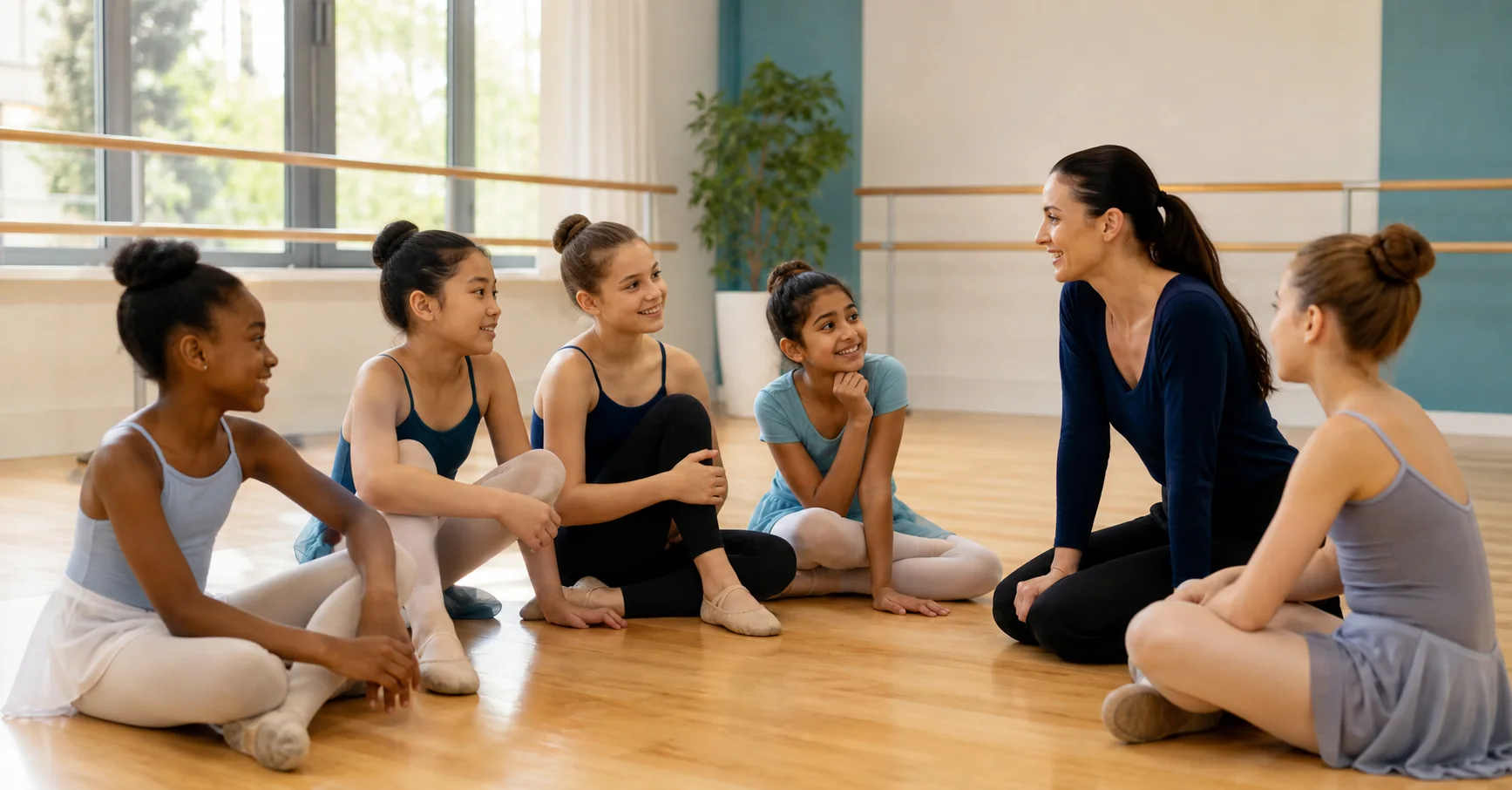
A positive dance studio culture is built when students, families, teachers, and staff know what respectful behavior looks like—and see the same standards applied consistently. It is not a slogan on the wall or an expectation that everyone must feel cheerful. It is the pattern created by everyday decisions: how teachers give corrections, how leaders handle conflict, how schedules and policies are communicated, and whether people can raise concerns without fear.
If you are trying to understand what has gone wrong in an unhealthy environment, start with our companion guide to the signs and causes of toxic dance studios. This article takes the constructive next step: building a studio where high standards and human dignity can exist together.
Start by defining culture as behavior
Words such as respect, excellence, and family sound good, but they are too broad to guide a difficult moment. Turn each value into actions people can recognize.
| Value | What it looks like in practice |
|---|---|
| Respect | Corrections address the work, not a dancer’s worth, body, identity, or character. |
| Growth | Teachers notice effort and improvement as well as placements, roles, and results. |
| Belonging | New and returning dancers are welcomed, names are learned, and cliques or exclusion are addressed. |
| Accountability | The same conduct standards apply to star dancers, beginners, parents, teachers, and owners. |
| Communication | Families receive important dates, costs, changes, and decisions through dependable channels. |
The U.S. Center for SafeSport recommends setting age-appropriate expectations with athletes and families in advance, discussing them often, and responding to misconduct consistently. That is a useful test for any studio value: could a student, parent, or new staff member tell what it means in the room?
Put expectations in one shared code of conduct
Create a short code that applies in classes, rehearsals, dressing areas, competitions, travel, email, group chats, and social media connected to the studio. Cover staff, dancers, parents, volunteers, and guest teachers. Include examples of acceptable conduct, unacceptable conduct, and what happens when a concern is raised.
Keep the document readable. A family is more likely to remember six clear commitments than six pages of warnings. Review it during enrollment and staff onboarding, not only after a problem. Your broader dance studio policies can hold the detailed procedures; the culture code should make the central expectations easy to see.
Align the adults before asking students to follow
Students quickly notice when one teacher permits ridicule, another ignores exclusion, and a third corrects every small breach. Hold a staff conversation about common situations before the season gets busy:
- How do we correct a dancer who is unprepared or disruptive?
- What language do we use when discussing bodies, food, weight, flexibility, and appearance?
- How do we respond when a student says a comment or touch made them uncomfortable?
- Who contacts a parent, and what gets documented?
- When does a concern move immediately to the owner or safeguarding lead?
Staff do not need identical personalities. They do need compatible standards. Role-playing a few difficult conversations can reveal disagreements before those disagreements affect a child.
Make feedback demanding without making it demeaning
A supportive studio can still be rigorous. Students can repeat combinations, receive direct technical correction, audition for roles, and experience disappointment. The distinction is whether challenge is paired with useful instruction and respect.
- Describe the movement or choice that needs to change.
- Give the dancer one practical next action.
- Correct privately when the issue is personal or potentially embarrassing.
- Avoid sarcasm, humiliation, threats, comparisons between bodies, and labels such as “lazy” or “difficult.”
- Leave room for questions when a dancer does not understand or feels unsafe.
The International Association for Dance Medicine & Science highlights teaching that balances artistic goals with evidence-informed practice and prioritizes dancers’ physical, emotional, and psychological safety. High expectations should help dancers learn; they should not require dancers to accept degradation as proof of commitment.
Apply rules consistently—especially when it is inconvenient
Favoritism damages trust even when leaders do not intend it. Casting and placement will never make everyone happy, but the process can still be explained. Attendance, rehearsal behavior, payment deadlines, costume expectations, and competition rules should be written and applied predictably.
Consistency does not mean ignoring individual needs. An accommodation, injury modification, or private family circumstance may call for a different response. The important distinction is that decisions come from a clear principle rather than status, popularity, or pressure.
Give dancers and families a safe way to speak up
“Come talk to us anytime” is a warm invitation, but it is not a complete reporting process. Say who can receive a concern, how someone can contact that person, what information is helpful, and what the studio will do next. Provide an alternative contact when the concern involves the usual contact person.
Listen before defending the studio. Summarize what you heard, explain the next step, and follow up when promised. Do not retaliate against a dancer for a good-faith concern or make the dancer responsible for managing an adult’s reaction.
Ordinary service complaints and immediate safety concerns are not the same. Suspected abuse, threats, or other urgent safeguarding matters should follow applicable law and the requirements of the relevant governing organization; they should not wait for a routine customer-service meeting.
Design belonging into ordinary studio life
Belonging is easier to build through repeated small practices than occasional themed events. Teachers can greet dancers by name, rotate partners thoughtfully, teach students how to welcome a newcomer, and interrupt jokes or exclusion before they become the room’s norm.
Use examples, music, costumes, and performance opportunities with care for the people and cultures represented. Check whether facilities, communication, dress expectations, and class structures create avoidable barriers. The goal is not to pretend everyone has the same needs; it is to help each dancer feel seen, respected, and able to participate safely.
Treat parents as culture partners
Parents shape the atmosphere in waiting rooms, carpools, competitions, and conversations after class. Explain the studio’s teaching philosophy, appropriate communication routes, audience behavior, and the difference between supporting a dancer and coaching from the lobby.
Share information early enough that families can act on it. Unclear charges, surprise rehearsals, missing costume details, and scattered messages create stress that can spill into relationships. Our guides to parent experience in dance studios and why families leave studios explore that operational side of trust in more detail.
Use dependable systems to support the culture
Software cannot make a teacher respectful or resolve a safeguarding concern. It can, however, remove preventable confusion. A shared calendar, documented policies, consistent billing records, attendance history, message history, and clear parent access make it easier for staff to give the same answer and follow through.
This is where culture and operations meet. When information lives in personal inboxes or memory, families experience different rules depending on whom they ask. A well-organized system supports fairness by making expectations, communication, and decisions easier to apply consistently. See how studio organization changes daily work for practical examples.
Recognize effort, progress, and contribution
Applause naturally gathers around lead roles, wins, and advanced skills. Broaden what the studio notices. Recognize a dancer who welcomed someone new, recovered thoughtfully from a mistake, helped reset the room, practiced consistently, or handled disappointment with maturity.
Recognition does not need a trophy or public ranking. Specific feedback—“You stayed focused and used the correction on the next attempt”—shows students which behaviors matter. Positive Coaching Alliance similarly recommends emphasizing effort, learning, connection, and life skills rather than treating the scoreboard as the only measure of success.
Respond to problems promptly and proportionately
A positive culture is not a conflict-free culture. It is a place where problems are handled instead of becoming gossip, fear, or resentment.
- Address the immediate behavior and protect anyone at risk.
- Gather information separately rather than conducting a public argument.
- Apply the relevant policy and document important decisions.
- Communicate the next step to the people who need to know, while respecting privacy.
- Follow up to see whether the behavior and its effects have actually changed.
Not every mistake needs the harshest consequence, but repeated or serious misconduct should not disappear because the person is talented, popular, profitable, or difficult to replace.
A practical 30-day culture reset
| Week | Small action | Evidence to collect |
|---|---|---|
| 1 | Ask staff, dancers, and families three anonymous questions: When do you feel supported? What creates stress? What is one change you want? | Repeated themes, not isolated popularity votes |
| 2 | Choose three observable culture commitments and review them with staff. | Examples staff agree to use in common situations |
| 3 | Publish the short code of conduct and the concern/reporting route. | Families can identify where to find both |
| 4 | Make one operational repair, such as a single schedule source or predictable weekly update. | Fewer repeat questions or missed changes |
Repeat the three questions after a term. Look for patterns in attendance, withdrawals, parent questions, staff turnover, reported concerns, and whether promised follow-ups happen. No single metric proves a healthy culture, but several signals moving together can show whether daily experience is improving.
Frequently asked questions
What makes a dance studio culture positive?
A positive studio has clear expectations, respectful and useful teaching, consistent policies, safe ways to raise concerns, reliable family communication, and leaders who respond to misconduct. Students can be challenged without being demeaned.
Can a competitive dance studio still have a positive culture?
Yes. Competition and high standards are compatible with a positive culture when feedback supports learning, decisions are explained and consistent, wellbeing is not sacrificed for results, and everyone remains accountable to the same conduct standards.
How should a studio owner handle complaints about a teacher?
Listen without promising a predetermined result, document the concern, protect anyone facing an immediate risk, gather information fairly, apply the relevant policy, and follow up. Safeguarding or legally reportable concerns require the appropriate formal process rather than routine customer-service handling.
How can dance teachers correct students without discouraging them?
Focus on the movement or decision, give a practical next step, match language to the dancer’s age, correct sensitive issues privately, and recognize effort or improvement. Avoid humiliation, body-based criticism, sarcasm, and attacks on character.
Can dance studio software improve culture?
Software cannot create respect or safety, but it can support a healthier culture by centralizing schedules, policies, billing records, attendance, and messages. That reduces inconsistent information and makes follow-through easier for staff and families.
Culture grows through follow-through. If operational confusion is making consistency harder, explore a 30-day Dance Studio Manager demo and test the communication, scheduling, billing, and parent-access workflows with your real studio routines.
Sources and further reading
- U.S. Center for SafeSport: Ways to Create a Positive Sport Environment
- Positive Coaching Alliance: Checklist for Positive Coaches
- Positive Coaching Alliance: Fostering Positive Parent/Caregiver Engagement
- International Association for Dance Medicine & Science: Safe in Dance International
- International Dance Organization: Every Dancer Matters